Free Ebook Measure for Measure (Folger Shakespeare Library), by William Shakespeare
- September 29, 2018
- By faniavanya24
- 0 Comments
Free Ebook Measure for Measure (Folger Shakespeare Library), by William Shakespeare
There is absolutely nothing to doubt t get this book as one of the discovering procedure to enhance the understanding and impact. When you could admire of the author as well as guide, you might feel relieved to check out the book. As a publication, Measure For Measure (Folger Shakespeare Library), By William Shakespeare does not just come to be the reading material. It can be the good friend to be always there with you. When you have absolutely nothing to do, this book can be a wonderful different to make your time better.
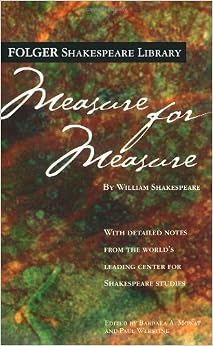
Measure for Measure (Folger Shakespeare Library), by William Shakespeare

Free Ebook Measure for Measure (Folger Shakespeare Library), by William Shakespeare
Why finding out more publications will give you much more leads to be successful? You recognize, the much more you review guides, the much more you will obtain the unbelievable lessons and knowledge. Many individuals with numerous publications to finish read will certainly act different to the people who don't like it so much. To provide you a much better point to do everyday, Measure For Measure (Folger Shakespeare Library), By William Shakespeare can be picked as good friend to invest the leisure time.
But, exactly what's your issue not also loved reading Measure For Measure (Folger Shakespeare Library), By William Shakespeare It is a great task that will certainly always offer wonderful benefits. Why you become so unusual of it? Numerous things can be sensible why people don't prefer to check out Measure For Measure (Folger Shakespeare Library), By William Shakespeare It can be the uninteresting tasks, guide Measure For Measure (Folger Shakespeare Library), By William Shakespeare compilations to check out, also careless to bring spaces almost everywhere. Now, for this Measure For Measure (Folger Shakespeare Library), By William Shakespeare, you will start to enjoy reading. Why? Do you know why? Read this web page by completed.
It is additionally just what you will certainly get from getting this book as referral to improve your high quality and understanding. It will show you how kind a book is. Every sentence and every page of this Measure For Measure (Folger Shakespeare Library), By William Shakespeare will certainly reveal you new point. It will not force you to understand or bear in mind all sentences. The most things to constantly remember is the lesson or message that is told in this publication.
you are not kind of best person, however you are a good person who constantly aims to be far better. This is among the lessons to obtain after checking out Measure For Measure (Folger Shakespeare Library), By William Shakespeare Reviewing will not make you feel lazy. It will make you more thorough to undergo your life and also your responsibilities. To read guide, you might not need to compel it totally finished basically time. Obtain the soft documents as well as you could manage when you intend to start reading when you will finish this book to review.
About the Author
William Shakespeare was born in April 1564 in the town of Stratford-upon-Avon, on England’s Avon River. When he was eighteen, he married Anne Hathaway. The couple had three children—an older daughter Susanna and twins, Judith and Hamnet. Hamnet, Shakespeare’s only son, died in childhood. The bulk of Shakespeare’s working life was spent in the theater world of London, where he established himself professionally by the early 1590s. He enjoyed success not only as a playwright and poet, but also as an actor and shareholder in an acting company. Although some think that sometime between 1610 and 1613 Shakespeare retired from the theater and returned home to Stratford, where he died in 1616, others believe that he may have continued to work in London until close to his death.Barbara A. Mowat is Director of Research emerita at the Folger Shakespeare Library, Consulting Editor of Shakespeare Quarterly, and author of The Dramaturgy of Shakespeare’s Romances and of essays on Shakespeare’s plays and their editing.Paul Werstine is Professor of English at the Graduate School and at King’s University College at Western University. He is a general editor of the New Variorum Shakespeare and author of Early Modern Playhouse Manuscripts and the Editing of Shakespeare and of many papers and articles on the printing and editing of Shakespeare’s plays.
Read more
Product details
Series: Folger Shakespeare Library
Mass Market Paperback: 336 pages
Publisher: Simon & Schuster; 58029th edition (July 1, 2005)
Language: English
ISBN-10: 0743484908
ISBN-13: 978-0743484909
Product Dimensions:
4.2 x 0.9 x 6.8 inches
Shipping Weight: 5.6 ounces (View shipping rates and policies)
Average Customer Review:
3.9 out of 5 stars
111 customer reviews
Amazon Best Sellers Rank:
#31,973 in Books (See Top 100 in Books)
Written amidst Shakespeare's tragedies, "Measure For Measure" is the Bard's last comedy and perhaps his darkest. In all Shakespearean comedy, conflict, villainy, or immorality disrupt the moral order, but harmony ultimately prevails. Not so with this comedy. As one critic has it, "Measure" leaves playgoers with many questions and few answers. Or does it? More about that in a moment. First, about the title. It's from the Bible. In the Old Testament there's "breach for breach, eye for eye, tooth for tooth" (Leviticus 24). And, from the New Testament, "what measure ye mete, it shall be measured to you again" (Mathew 5). It's the theme of the play, but, as we shall see, it never gets the results hoped for, until the very end, when, to quote from another of Shakespeare's plays, "mercy seasons justice."The good Duke of Vienna, Vincentio, is concerned with the morals of his city. He enacts a number of reforms, then takes a sabbatical, and tells his deputy governor, Angelo, to see that the reforms are enforced. But Angelo goes too far: he enforces the law to the letter and shows no mercy for violators. Claudio is a victim of Angelo's strict enforcement policy. He's betrothed to Juliet, who is pregnant with his child. Because they are not yet married, he's arrested for fornication and sentenced to death by decapitation. Enter Isabella, Claudio's sister and the play's heroine. She's a young novice preparing to become a nun on the very day of his execution, and makes an appeal to Angelo for leniency. Her plea is reminiscent of Portia's words to Shylock in "The Merchant of Venice." "Merciful heaven, / Thou rather with thy sharp and sulfurous bolt / Splits the unwedgeable and gnarled oak / Than the soft myrtle; but man, proud man, / Dressed in a little brief authority, / Most ignorant of what he's most assured / His glassy essence, like an angry ape / Plays such fantastic tricks before high heaven / As makes the angels weep." As with Shylock, Angelo is unmoved. Rather, he offers to release Claudio in exchange for sex. Isabella refuses, even though it means her brother's death. "Better it were a brother died at once, than that a sister, by redeeming him, should die forever."The good Duke, meanwhile, has not taken a sabbatical after all, but has been masquerading as a friar. But for what purpose? To determine if Angelo will do the right thing? Shakespeare doesn't say. He advises Isabella to trick Angelo by agreeing to meet with him and then sending another woman in her place. Enter Mariana. She was once betrothed to Angelo, until Angelo learned her dowry was lost at sea, at which point he called off the engagement. Mariana agrees to assume Isabella's identity and sleep with Angelo to secure Claudio's release. The bed trick goes as planned, but Angelo reneges on his promise and orders the immediate execution of Claudio. The Duke intervenes and Claudio is spared, but neither Angelo nor Isabella know this; they think Claudio is dead. The Duke then informs the deputy that he is returning home.Angelo and court officials greet the Duke at the city gates. Isabella and Mariana are also there, and call upon the Duke to redress their wrongs. Instead, the Duke has Isabella arrested and orders Angelo to marry Mariana. Once they are married, he sentences Angelo to death for the murder of Claudio. At this point, Shakespeare takes some liberties that many think makes for an implausible and unsatisfactory ending. In his succinct and compelling book, "Shakespeare and Forgiveness," Professor William H. Matchett makes sense of the play's incongruities, as we shall see in a moment.Isabella is released. Upon hearing of Angelo's death sentence, she goes before the Duke to plea for mercy. But instead of telling Isabella her brother is alive, the Duke proposes marriage. Nothing has prepared the audience for this. Matchett suggests: "The point is that Isabella must consider Claudio dead if Shakespeare is not to lose his big scene: her true saintliness is only shown in her forgiving Angelo despite her thinking he has killed Claudio. The Duke must remain an almost inhuman manipulator to keep her in this position. And so he does."Isabella (kneeling): "Most bounteous sir, / Look, if it please you, on this man condemned, / As if my brother lived. I partly think / A due sincerity governed his deeds, / Till he did look on me. Since this is so, / Let him not die. My brother had but justice, / In that he did the thing for which he died. / For Angelo, / His act did not overtake his bad intent, / And must be buried but as an intent / That perished by the way. Thoughts are not subjects, / Intents but merely thoughts." The Duke pardons Angelo, and once again proposes marriage. Isabella answers with silence. Comments Matchett: "Shakespeare has staged a most dramatic forgiveness scene at the climax of his play, but at the cost of establishing Isabella's moral integrity by damaging the Duke's. It throws the whole mutuality of their marriage into doubt."He adds: "Perhaps we should accept the created image without worrying about the Duke's character. . . . One has to admit, however, that the Duke's proposal--`I have a motion much imports your good'--is about as arrogantly self-centered as they come, while the silence with which Isabella meets it, Shakespeare having provided her with no response, has allowed many modern productions to substitute denial for consent. This no doubt violates the assumption of Shakespeare's play, but it allows recognition of the discomfort created by the forgiveness scene." The play ends with Isabella learning her brother is alive and well, but the question of her marrying the Duke is a matter of interpretation. However, in the final analysis, the full measure of forgiveness outweighs Angelo's measure of misdeeds, and trumps the play's defects.
Written amidst Shakespeare's tragedies, "Measure For Measure" is the Bard's last comedy and perhaps his darkest. In all Shakespearean comedy, conflict, villainy, or immorality disrupt the moral order, but harmony ultimately prevails. Not so with this comedy. As one critic has it, "Measure" leaves playgoers with many questions and few answers. Or does it? More about that in a moment. First, about the title. It's from the Bible. In the Old Testament there's "breach for breach, eye for eye, tooth for tooth" (Leviticus 24). And, from the New Testament, "what measure ye mete, it shall be measured to you again" (Mathew 5). It's the theme of the play, but, as we shall see, it never gets the results hoped for, until the very end, when, to quote from another of Shakespeare's plays, "mercy seasons justice."The good Duke of Vienna, Vincentio, is concerned with the morals of his city. He enacts a number of reforms, then takes a sabbatical, and tells his deputy governor, Angelo, to see that the reforms are enforced. But Angelo goes too far: he enforces the law to the letter and shows no mercy for violators. Claudio is a victim of Angelo's strict enforcement policy. He's betrothed to Juliet, who is pregnant with his child. Because they are not yet married, he's arrested for fornication and sentenced to death by decapitation. Enter Isabella, Claudio's sister and the play's heroine. She's a young novice preparing to become a nun on the very day of his execution, and makes an appeal to Angelo for leniency. Her plea is reminiscent of Portia's words to Shylock in "The Merchant of Venice." "Merciful heaven, / Thou rather with thy sharp and sulfurous bolt / Splits the unwedgeable and gnarled oak / Than the soft myrtle; but man, proud man, / Dressed in a little brief authority, / Most ignorant of what he's most assured / His glassy essence, like an angry ape / Plays such fantastic tricks before high heaven / As makes the angels weep." As with Shylock, Angelo is unmoved. Rather, he offers to release Claudio in exchange for sex. Isabella refuses, even though it means her brother's death. "Better it were a brother died at once, than that a sister, by redeeming him, should die forever."The good Duke, meanwhile, has not taken a sabbatical after all, but has been masquerading as a friar. But for what purpose? To determine if Angelo will do the right thing? Shakespeare doesn't say. He advises Isabella to trick Angelo by agreeing to meet with him and then sending another woman in her place. Enter Mariana. She was once betrothed to Angelo, until Angelo learned her dowry was lost at sea, at which point he called off the engagement. Mariana agrees to assume Isabella's identity and sleep with Angelo to secure Claudio's release. The bed trick goes as planned, but Angelo reneges on his promise and orders the immediate execution of Claudio. The Duke intervenes and Claudio is spared, but neither Angelo nor Isabella know this; they think Claudio is dead. The Duke then informs the deputy that he is returning home.Angelo and court officials greet the Duke at the city gates. Isabella and Mariana are also there, and call upon the Duke to redress their wrongs. Instead, the Duke has Isabella arrested and orders Angelo to marry Mariana. Once they are married, he sentences Angelo to death for the murder of Claudio. At this point, Shakespeare takes some liberties that many think makes for an implausible and unsatisfactory ending. In his succinct and compelling book, "Shakespeare and Forgiveness," Professor William H. Matchett makes sense of the play's incongruities, as we shall see in a moment.Isabella is released. Upon hearing of Angelo's death sentence, she goes before the Duke to plea for mercy. But instead of telling Isabella her brother is alive, the Duke proposes marriage. Nothing has prepared the audience for this. Matchett suggests: "The point is that Isabella must consider Claudio dead if Shakespeare is not to lose his big scene: her true saintliness is only shown in her forgiving Angelo despite her thinking he has killed Claudio. The Duke must remain an almost inhuman manipulator to keep her in this position. And so he does."Isabella (kneeling): "Most bounteous sir, / Look, if it please you, on this man condemned, / As if my brother lived. I partly think / A due sincerity governed his deeds, / Till he did look on me. Since this is so, / Let him not die. My brother had but justice, / In that he did the thing for which he died. / For Angelo, / His act did not overtake his bad intent, / And must be buried but as an intent / That perished by the way. Thoughts are not subjects, / Intents but merely thoughts." The Duke pardons Angelo, and once again proposes marriage. Isabella answers with silence. Comments Matchett: "Shakespeare has staged a most dramatic forgiveness scene at the climax of his play, but at the cost of establishing Isabella's moral integrity by damaging the Duke's. It throws the whole mutuality of their marriage into doubt."He adds: "Perhaps we should accept the created image without worrying about the Duke's character. . . . One has to admit, however, that the Duke's proposal--`I have a motion much imports your good'--is about as arrogantly self-centered as they come, while the silence with which Isabella meets it, Shakespeare having provided her with no response, has allowed many modern productions to substitute denial for consent. This no doubt violates the assumption of Shakespeare's play, but it allows recognition of the discomfort created by the forgiveness scene." The play ends with Isabella learning her brother is alive and well, but the question of her marrying the Duke is a matter of interpretation. However, in the final analysis, the full measure of forgiveness outweighs Angelo's measure of misdeeds, and trumps the play's defects.The Folger Shakespeare Library edition of "Measure for Measure" is well edited, with explanations and commentaries that shed considerable light on the play. However, until reading Matchett's commentary (which I purchased separately), I too was discomfited with the play's ending. Four stars.
Measure for Measure (Folger Shakespeare Library), by William Shakespeare PDF
Measure for Measure (Folger Shakespeare Library), by William Shakespeare EPub
Measure for Measure (Folger Shakespeare Library), by William Shakespeare Doc
Measure for Measure (Folger Shakespeare Library), by William Shakespeare iBooks
Measure for Measure (Folger Shakespeare Library), by William Shakespeare rtf
Measure for Measure (Folger Shakespeare Library), by William Shakespeare Mobipocket
Measure for Measure (Folger Shakespeare Library), by William Shakespeare Kindle